The Weekly Dirt 09.04.24


09.04.24

Around The Farm

Tomato Growing at the 47th Parallel

By Perry Acworth, UW Farm Manager

Off the vine, juicy, ripe tomatoes are my favorite crop to grow and savor. Hands down. As a child, however, I was not a fan. To my younger self, they tasted mealy, lacked flavor and were tough-skinned. It wasn’t until 1990, fresh out of college, that I grew my first tomatoes in the backyard of an old rented farmhouse in Vermont – the bright red ‘sweet million’ cherry tomato. Ever since tasting the round juicy fruit off the vine – I have never looked back. 
 

Many factors can lead to successful tomato growing. Climate, our regional Pacific Northwest (PNW) weather, is the most important influencer on how and what we grow. Couple that with cultivation practices, site and soil profiles. We can alter our methods, build structures and renew soil, but there are also moments of unanticipated productivity, and challenges that can still lead to either a bumper crop a disappointing harvest or somewhere in between. This season at the UW Farm, the cool spring, a “dry farming” experiment, later seeding date and deer have tested our creativity and knowledge as farmers.


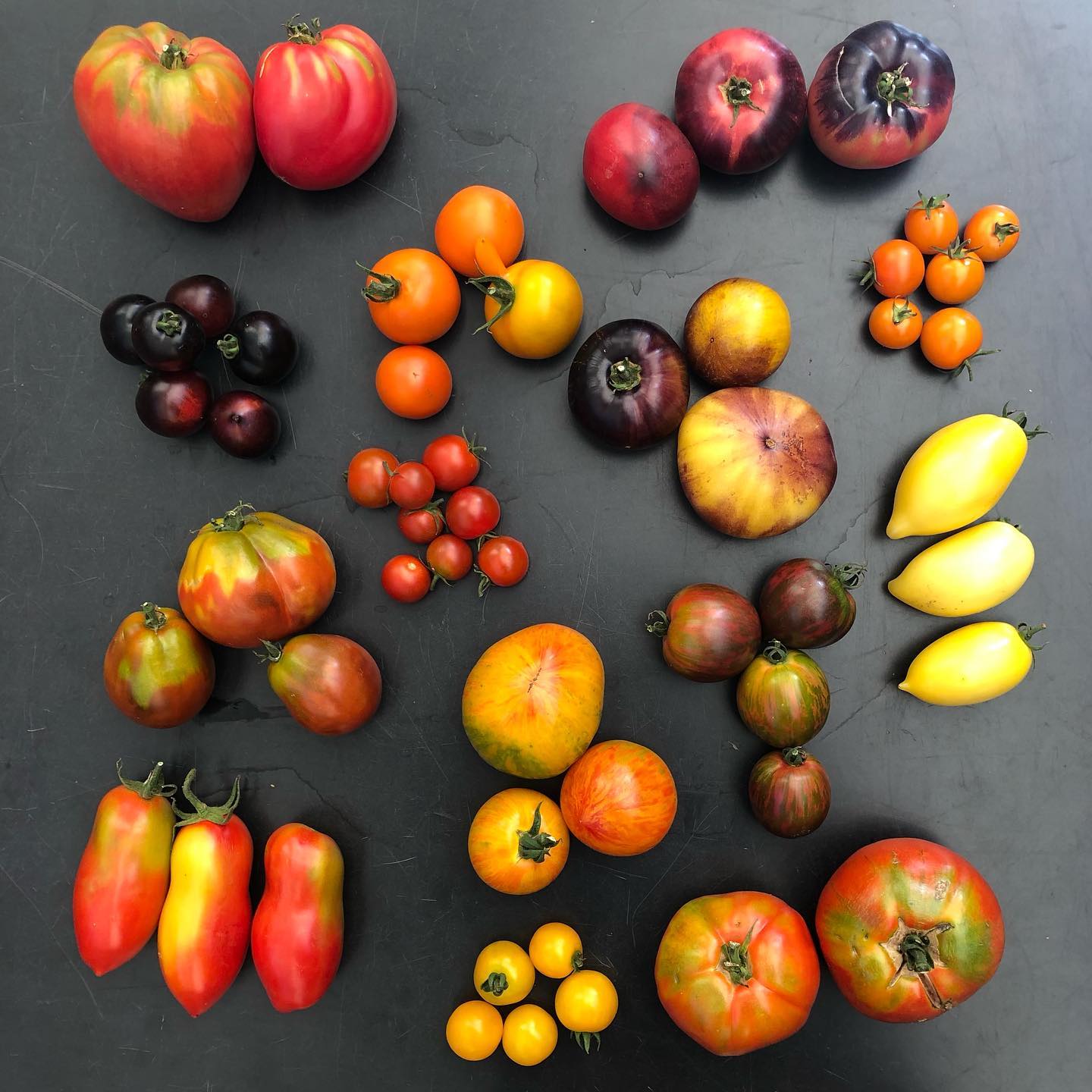
Photo above, UW Farm tomato varieties 2023

Climate

Seattle sits at the 47th parallel. To be specific, the city lies 47 degrees and 49 minutes north of the equator. I do not want to get too deep into physical geography, but it is important to note how far north we truly are. Seed and sets sold for “long day” or “short day” growing indicate these differences. Seattle is definitely the former. 

As stated in the Growing Food in the City Garden Guide (see Resources below), “Gardening year-round in the Pacific Northwest, our climate is cool and wet in the spring and fall, and usually above freezing in the winter. That allows gardeners to plant fall and overwintering crops like kale, collards, sprouting broccoli, leeks and carrots in late July, August and early September, and garlic or cover crops in October.” However, the cool spring delays tomato planting, resulting in a short growing and harvest season. Note Bellingham-based, Uprising Seeds’  Planting Guide.

When I first moved to Seattle in the fall of 2012, I relied on Tilth Alliance’s user-friendly booklet The Maritime Northwest Garden Guide, along with Steve Solomon’s Growing Vegetables West of the Cascades. Since then I have expanded to Farming While Black, WSU and OSU websites and other resources. Because we have abundant sun and rain, we are fortunate. Here at the campus farm, warm-season crops are started indoors in a greenhouse and transplanted outdoors to make up for our chilly spring. Home gardeners and others who lack greenhouse access, can and should purchase starts. Dropping seeds into the ground will not yield many tomatoes because of our climate.

Cultivation Practices

At the UW Farm, we traditionally transplant our tomatoes starts, that we grow from seed, in late May or early June, when optimal soil temperatures are reached —  70 degrees give or take. This year, to save on potting soil and labor costs, we started seeds later than in years past – March 28th. We transplanted right on schedule, according to guidance from commercial seed growers, and watered-in with a fish emulsion. All went well. Most of our plants had not flowered at planting time – recommended by well-respected, Johnny’s Selected Seed Company.

A new practice this year was being part of a multi-farm demonstration lead by the Dry Farm institute. Our tomatoes were one of four crops dry farmed. In the tomato plot, a red-hued plastic mulch was laid over the bed. Different colored mulches are part of on-going research in deterring pests and improving production. They also reduce weeds by blocking sun, reduce watering needs by blocking evaporation. After planting, I directed the farm team to avoid wearing plot H – our tomato plot. We didn’t water for four weeks. The tomatoes grew…..slowly. Very slowly. The leaves curled indicating moisture stress, but they managed. This reduced the labor needed for pruning and trellising but ultimately the flowering was delayed.

Soil and Site 

Soil and Site are also factors. Because it rains nearly year round in the PNW, our soils are leached of nutrients. Lime, Nitrogen, Potassium and other micronutrients wash away and into the water supply or elsewhere. Soil testing becomes important. Just as knowing your soil comes with experience and time, We are lucky, King County Conservation District makes this easier by providing free soils tests. high organic matter and amending soil for with nutrient amendments lead to healthy soil and healthy vigorous tomato plants. 

Sun, when it comes to tomatoes is a huge benefit for ripening fruit and pollination. In the PNW at Summer solstice,those at the 47th parallel have around 16 hours of sunlight. Tomatoes are “day neutral” plants so length of daylight does not determine blossoming. Warm, sunny days do encourage pollination and overall growth.  

Regardless of day or night length, tomato plants must reach ripeness-to-flower, which is a minimum vegetative state where the structure of the plant can support flowers and fruit and the plant has the necessary energy supplies to create viable offspring. For tomatoes this is a small window. 

Unanticipated Challenges

At the UW Farm we grow field tomatoes. Most home gardeners are in this boat, lacking space or resources to build high tunnels, low tunnels or greenhouses. Field tomatoes are more exposed to variable weather and pests such as wildlife and vandalism. There are no fences at the UW Farm and we are adjacent to the Union Bay Natural Area which supports many native and non-native wildlife. For the first time, in 2024, we experienced heavy damage from Black Tail Deer.  

The 4th of July traditionally marks the first tomato harvest. By now we would be distributing 100’s of pounds each week. In fact we are known for spectacular, diverse, tasty tomatoes that echo Husky Colors in purple and gold. We had such a successful season in 2019,  we hosted a tomato tasting event. Not so this year. In my 31 years as a farmer growing tomatoes, this has been the most challenging season. We are not alone, this year other farmers are experiencing lower than average production. This, combined with our dry farming learning curve, cool spring and late seeding, led to a crop failure. We are now reserving all tomatoes exclusively for our CSA shareholders. We have our fingers crossed for a warm fall and additional harvests. 
  

Resources (click the links below to learn more):

Video of Deer at the UW Farm


Black tail deer visit the UW Farm, one of the many wildlife spottings due to our growing site being adjacent to the Union Bay Natural Area. Deer can be seen as pests but also play a valuable role in our ecosystem.

Recipe of the Week:

Zucchini and Swiss Chard Tart

Provençal Zucchini and Swiss Chard Tart

By: Martha Rose Shulman, New York Times

Image and Recipe Source: New York Times

Ingredients: 

Yield: One 10-inch tart, serving eight to ten

  • 1 pie pastry
  • 1 pound Swiss Chard
  • Salt to taste
  • 2 tablespoons extra virgin olive oil
  • 1 medium onion (such as Walla Walla onion), finely chopped
  • 2 pounds zucchini (of any variety!), cut in small dice (¼ to ⅓ inch)
  • 2 to 3 large garlic cloves (to taste), minced
  • 1 teaspoon fresh thyme leaves, chopped
  • 1 to 2 teaspoons chopped fresh rosemary (to taste)
  • 2 ounces Gruyère cheese, grated (½ cup, tightly packed)
  • 3 large eggs, beaten
  • Freshly ground pepper 

Instructions:

1. Bring a large pot of water to a boil while you stem the greens, and wash them thoroughly in several rinses of water. If the ribs are wide, wash and dice them, then set aside. Fill a bowl with ice water. When the water reaches a rolling boil, add a generous amount of salt and the chard leaves. Blanch for one minute, until just tender. Using a slotted spoon or deep-fry skimmer, transfer to the ice water, then drain. Squeeze out excess water and chop. Set aside.

2. Heat the oil over medium heat in a large nonstick skillet, and add the onion and diced chard stems, if using. Cook, stirring, until tender, about five minutes. Stir in the zucchini. Season to taste with salt, and cook, stirring, until just tender and still bright green, about 10 minutes. Stir in the garlic, thyme and rosemary, and cook with the zucchini and onion until the garlic is fragrant, about one or two minutes. Stir in the greens, toss everything together, and remove from the heat. Taste and season with salt and pepper.

3. Beat the eggs in a large bowl. Stir in ¼ to ½ teaspoon salt (to taste), the zucchini mixture, and the Gruyère. Mix everything together, add pepper, taste once more and adjust seasoning. 

4. Preheat the oven to 375 degrees. Oil a 10-inch tart pan. Roll out two-thirds of the dough and line the pan, with the edges of the dough overhanging. Freeze the remaining dough. Fill the lined pan with the zucchini mixture. Pinch the edges of the dough along the rim of the pan. Place in the oven and bake 50 minutes, until set and beginning to color. Allow to rest for at least 15 minutes before serving (preferably longer). This can also be served at room temperature.

News and Noteworthy:

Join us for a gourmet, chef-prepared meal, supporting the UW Farm!

UW Farm Upcoming Involvement Opportunities

We are now hiring paid and unpaid interns for Autumn quarter! Check out these opportunities on our website.

Career Opportunities in Agriculture & Food Systems:

Food Access Resources

The UW Farm donates regularly to the UW Food Pantry. During peak season we also donate to nearby food banks. The links below are resources to help you or someone you know with food access.  

Help The Farm Grow!

Every year, we have the capacity to grow more food and increase our educational and research program at the UW, but not without your support. Every contribution goes to work immediately, helping us better serve students. Your support can sustain our momentum and help seed new opportunities for student internships, academic work, and future growth. Please consider making a gift to the Farm online

The Weekly Dirt is produced once a week by the University of Washington Farm, a program of the UW Botanic Gardens, School of Environmental and Forest Sciences, College of the Environment. It is published nearly year-round for educational purposes and the majority of the content is written or contributed by students and farm staff.

This issue’s contributors:

Managing Editor: Erica Fong, 2024-25 Americorps Education and Outreach Lead at the UW Farm
Around the Farm: Perry Acworth, Farm Manager
Recipe of the week: Martha Rose Shulman, New York Times

Contributing Editors: Perry Acworth, Farm Manager; Rebecca Alexander; Librarian, Manager of Reference and Technical Services, Elisabeth C. Miller Library
Photo Credits: Perry Acworth. Other photos retrieved from the internet and noted in sections 

Copyright © 2024 The UW Farm, All rights reserved.
You are receiving the UW Farm Weekly Newsletter.

Our mailing address is:
The UW Farm
3501 NE 41st St, 
Seattle, WA 98105

On campus mailbox
Box 354115

NEW email address:
uwfarm@uw.edu