Rare Plant Profile: Basalt Daisy

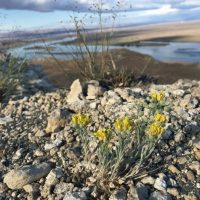
Basalt daisy (Erigeron basalticus) is a cliff dweller, found exclusively along the Yakima River Canyon and Selah Creek. There you will find it tucked into crevices and cracks of the basalt cliffs formed in the late Miocene (5 to 11 million years ago). There are six known populations in Washington State. Over the past few years Rare Care has made a concerted effort to re-monitor all known occurrences, and we only have one left to visit!
Read moreRare Care Volunteer Spotlight: Steven Clark

Each year Rare Care recognizes volunteers for their outstanding contributions.
Steven Clark has been with Rare Care since the inception of our rare plant monitoring program in 2001! Since then, Steven has contributed over 320 hours and submitted nearly 40 reports. He integrates Rare Care into the biology courses he teaches at Clark College, and helps inspire the future conservation biologists of our state.
Rare Care Research Project Updates
By Allie Howell
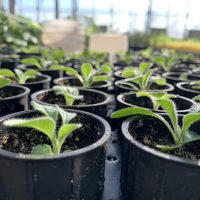
Allie Howell transitioned into Rare Care’s temporary Research Scientist position in February. Through September, she will be collecting field data, growing plants for outplantings, and helping with reporting on our many on-going research projects.
I have the exciting opportunity to delve deeply into several of this program’s ongoing projects.
So far, most of my work has been devoted to conducting vulnerability assessments on the rare alpine plants I monitored in the North Cascades, Olympic and Mt.
Sierra Cliffbrake
by Josh Wozniak
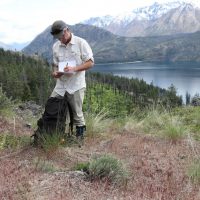
Lake Chelan is a narrow, glacially-carved trench: 50 miles long from North Cascades National Park to the town of Chelan. Along its shores, species typical of both the east and west flanks of the Cascades Range are well-represented. The areas surrounding the lake also contain a number of rare plant species, including some that occur nowhere else in Washington.
Rare Plant Monitoring: Tips of the Trade
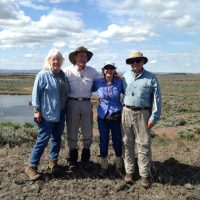
Tom Erler and Darcy Dauble are two long-time rare plant monitoring volunteers with a breadth of experience to share with our 38 recently trained monitors! During the monitoring season you will catch Tom searching for rare plants across the state, anywhere from the San Juan Islands to Douglas County. His day job is with the King County Noxious Weed program. Darcy Dauble is a retired librarian who can be found botanizing the Blue Mountains of southeastern Washington.
Read moreReflections from the Alpine: Allie Howell
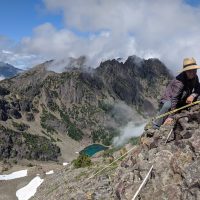
This summer as Rare Care Interns we worked on an alpine plant monitoring project for the National Park Service. On the surface, our job was simple: go to a site in Olympic, North Cascades, or Mt. Rainier National Parks, find the plant, map the edges of the population in the area, and usually set up a permanent plot to be monitored by the National Park Service in the future.
Read moreRare Plants and a Changing Climate
By Maya Kahn-Abrams
Over the past five months I have been immensely privileged to work on several of Rare Care’s projects restoring our beloved native rare plants all over Washington state. From hot July afternoons helping map shimmering meadows of pink Wenatchee Mountains checkermallow (Sidalcea oregana var calva) and purple Wenatchee larkspur (Delphinium viridenscens), to epic early mornings counting baby seedlings of White Bluffs bladderpod (Physaria douglasii ssp.
How alpine views helped me feel renewed
By Jaileen Merced
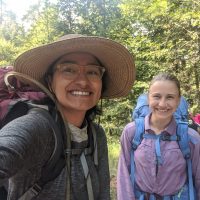
It is hard to believe that summer is over, and Allie and I have gone on 7 backpacking trips and 2 camping trips. Each of them very unique and special. From beautiful forest walks to steep crumbling slopes. We have covered so much ground and been to places I never thought I could reach. Working for Rare Care this year has been a privilege and a challenge.
Rare Care: Notes from the Field
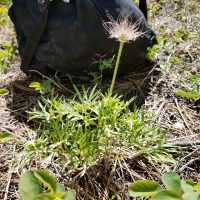
2021 was a jam-packed and prolific year of rare plant conservation for both Rare Care volunteers and staff. Safety remained a top concern, with care given to evolving COVID-19 protocols, and the wildfire season affecting access to many east side locations. Despite the extra challenges, we successfully completed research fieldwork and rare plant monitoring assignments, and added new collections to the seed vault.
Read moreHabitat Scouting from the Sky
By Drew Foster
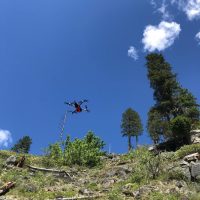
It’s late in the hotel room and every outlet is precious- lamps and clocks are abandoned for a plethora of plugs and cords. Everything is plugged in and charging: smartphone, tablet, laptop, power station, and batteries for the drone and sensor, check! Memory cards have plenty of space, data are backed up, and extra batteries and cables are in the bag, check!