Selected Cuttings from the Joseph A. Witt Winter Garden (Part II)

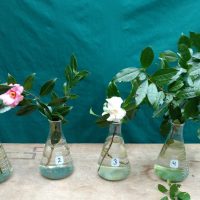
1) Corylopsis glabrescens Winter Hazel
This native of Korea and Japan teases us with flower buds that seem to be just on the edge of opening – for weeks!
The Joseph Witt Winter Garden contains multiple species of Corylopsis so that people may compare and appreciate the subtle differences in form and flower color the genus Corylopsis offers.
2) Pieris japonica Lily of the Valley Shrub
The spring flowers and often the new growth of Pieris can be quite showy, but the buds themselves decorate our gardens throughout the winter months.
Read moreSelected Cuttings from the Joseph A. Witt Winter Garden
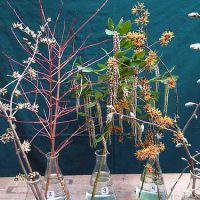
The Witt Winter Garden was originally designed and planted in 1949. In the late 1980s the garden was named after Joseph A. Witt, an Arboretum curator who had a special interest in winter ornamental plants. Here is a small sampling of plants to be enjoyed now in the Winter Garden.
Download a map and plant list at:
https://botanicgardens.uw.edu/washington-park-arboretum/gardens/joseph-a-witt-winter-garden/
1) Chimonanthus praecox (Wintersweet)
The 15’ tall arching stems host beautiful and aromatic creamy, yellowish flowers.
Read moreThe New Zealand Dead Look

New Zealand has a large number of shrubs with small tough leaves and wiry interlacing branches – divaricates. Some even have brown or grey new growth, giving a dead-like appearance. It is suggested that this may be a defensive mechanism to deter browsing moa (extinct flightless birds).
1) Coprosma propinqua (Mingimingi)
A visiting New Zealand scholar once described Coprosma as “a genus without morals that hybridizes incessantly” as she was politely telling us she didn’t think we were actually growing true Coprosma propinqua.
Read moreHelping Gardens Grow: How volunteers nurture new plants to support the Arboretum Foundation

If you’ve ever wandered the Washington Park Arboretum delighting in the year-round plant displays and wishing you could take a piece of the experience home, then be sure to explore the Pat Calvert Greenhouse on your next visit.
The greenhouse—and the volunteer effort behind it—were established by its namesake in 1959. Pat Calvert was inspired to create a space for Arboretum Foundation members to practice propagation, and she worked with the Foundation to secure funds to build the structure and start the program.
Cold? No Problem

The following conifers are among the cold-hardiest on earth!
1) Abies balsamea (Balsam Fir)
USDA Hardiness Zone 3: -40° to -30°F.
North American fir with range distribution as far north as Labrador, Canada.
Balsam fir is the most cold-hardy and aromatic of all firs.
2) Juniperus communis (Common Juniper)
USDA Hardiness Zone 2: -50° to -40°F.
The most widespread tree or shrub in the world!
Happy Holidays from the Washington Park Arboretum!
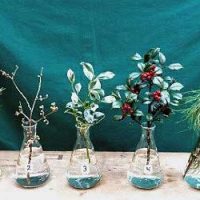
1) Calocedrus decurrens Incense Cedar
This native of Oregon and south to Baja California was first described by Colonel John C. Fremont in 1846.
Incense cedar is often confused with Western Red Cedar (Thuja plicata), but is distinguished by its branchlets being held vertically, its narrow pyramidal habit, and by the lack of white stomata on the leaf undersides.
Located north of the Wilcox Bridge (marked by a sign) and east of the Pinetum Loop Trail.
Glimpse into the past – Puget Sound Rhododendron Hybrid Garden

Since the late 1930s, the Puget Sound region has been regarded by some as the best rhododendron growing region in the U.S.A., with documentation for over 2000 hybrid rhododendrons. Washington Park Arboretum has always been a leader in showcasing rhododendrons, including species and hybrids. The hybridization of rhododendrons was one of the legacies of both the former curator, Joe Witt, and the former director Brian O.
Read moreFine (Evergreen) Foliage of Fall

1) Arbutus unedo Strawberry Tree
Autumn brings bright white bell flowers and deep red-orange fruit, both of which are set off by the deep-green, leathery leaves.
Hidden under the foliage are attractive stems with shredding red-brown bark.
2) Berberis (Mahonia) fortunei Chinese Mahonia
Many evergreen Mahonias have excellent textural foliage, from large and bold to low and delicate.
Berberis fortunei can be found growing low to the ground on our Sino-Himalayan hillside.
Selected Mid-Autumn Cuttings from the Washington Park Arboretum

1) Araucaria araucana Monkey Puzzle
Native to Chile and Argentina in the south central Andes mountains.
This long-lived tree is frequently described as a living fossil.
Large cones yield many edible nuts, similar to a pine nut.
2) Berberis gagnepainii Gagnepain’s Barberry
This evergreen shrub is native to China in the Sichuan and Yunnan Provinces.
Shrub is protected by many slender three-spined thorns.