The Weekly Dirt 04.19.23
04.19.23
Around The Farm
By Audrey Sun, UW Farm Dani Elenga Organics Intern
Beginner's Guide to Sourdough
Long time, no read! For those of you who don't know, my name is Audrey Sun and I am the former Fall Quarter Nutrition Education Intern and current Dani Elenga Organic Re-certification Intern. You might remember seeing some of the recipes I did for a pickling guide, charred cabbage, or even a festive winter squash stuffing.
Read moreApril 2023 Plant Profile: Western Leatherwood
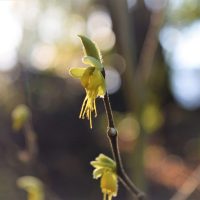
As Spring arrives, we here in the Pacific Northwest are gifted the opportunity to observe a wide variety of plant species we may not have noticed before. This month, we are focusing in on a beautiful, rare, San Francisco Bay-area endemic shrub. Dirca occidentalis can be found in the Washington Park Arboretum, but wait… what is it doing here?
Read moreRare Care Volunteer Spotlights
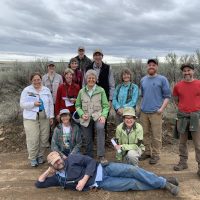
Each year Rare Care recognizes volunteers for their outstanding contributions.
Mickie Chamness trained back in 2005 and has completed 17 monitoring assignments and contributed over 140 volunteer hours. We really appreciate Mickie’s contributions to the botany surveys at Two Steppe and Marcellus Shrub Steppe NAPs, and her monitoring reports each year are excellent. We are so lucky to have her on the monitoring team for so long!
Partner Spotlight: Jesse Miller

Sometimes your professional career takes you in a straight line, other times it involves a few twists and turns. For Jesse Miller, it involves looping back around a couple times, at least geographically. His new position as the Botanist for the Washington Natural Heritage Program (WNHP) is the second time he has landed in Olympia – the first was as an undergraduate at Evergreen State College.
Read morePlant Spotlight: Washington Polemonium
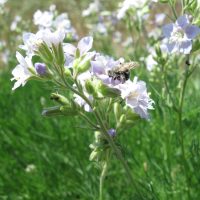
Washington polemonium (Polemonium pectinatum) is a distinctive perennial Washington endemic. As the Latin name implies, its leaves are pectinate, a term that describes its feathery, pinnately compound leaves that have 11-17 narrow leaflets. These unique leaves make this species stand out amongst other members of the genus in Washington. In mid-May to early June, its branched inflorescence blooms with light blue to lavender flowers that sometimes have faint maroon veins.
Read moreVolunteers Make a Great Find
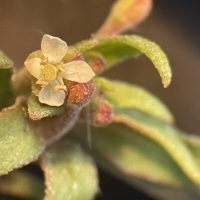
In early June, Rare Care volunteers Mickie Chamness and Janelle Downs stumbled upon a population of small evening primrose (Eremothera minor), a state sensitive plant species. It was actually on their way to another primrose monitoring assignment that they noticed the small population of 30 plants in the tracks of the dirt road they were hiking. This population of small evening primrose is one that Rare Care had previously searched for three times in that exact location, but never found any.
Read moreClimate Change Vulnerability in the Alpine

This past September, Rare Care completed a three-year study to assess the vulnerability of rare alpine plants. Working with the National Park Service (NPS), Rare Care staff and seasonal interns mapped and monitored 159 populations found in National Parks in Washington to climate change, installed 26 long-term monitoring plots, collected seeds, assessed 26 focal species’ vulnerability to climate change, and developed adaptive management strategies that NPS could employ to mitigate the impacts of climate change.
Read moreThe Weekly Dirt 04.12.23
04.12.23
Around The Farm
By Perry Acworth, UW Farm Manager
Seattle Sister City is First in France to Offer Degree in Urban Agriculture
A year ago three delegates from Nantes, the sixth largest city in France requested a tour of the UW Farm. With the help of a translator, provided by the Seattle-Nantes sister City Association, and vocabulary learned from my high school french language class decades ago, I explained how we manage three different models of urban farming on campus and how we engage with students.
Spotlight on BES 491 undergraduate research student: Brandy Eckman
Champion Trees of Washington Park Arboretum
What is a Champion Tree?
A Champion Tree is the biggest tree of its species in either circumference, height, or spread (how far the branches spread out to either side). Their measurements are given a point valuation in American Forest Points and then sent to either the state, national, or international registry who all keep track of Champion Trees with the highest point values in each species.
Read moreThe Weekly Dirt 04.05.23
04.05.23
Around The Farm
By Dan Cook, UW Farm Community Volunteer and Seattle home gardener.
Jamming, Part 3 – The Final Chapter!
OK, two weeks ago, I talk about making fruit jams, and last week I talked about the equipment I use for my jamming. This week I will talk about the step-be-step process of converting the ingredients into Tasty Jam!