Partner Spotlight: Dan Turck and Gabriel Campbell
The Washington Natural Heritage Program has two new state botanists in its ranks, Dan Turck and Gabriel Campbell. Two sides of the same coin, they bring a collective 30 years of ecological experience to the program.
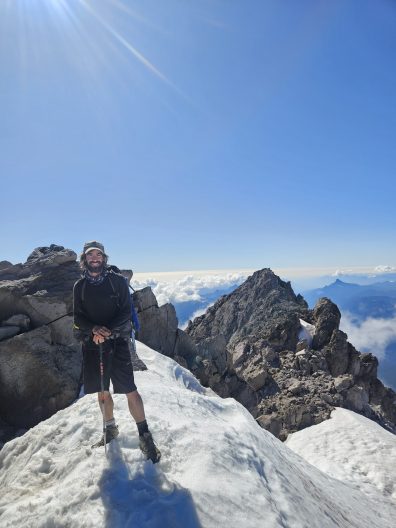
Both botanists had winding paths to end up here in Washington. Dan grew up in western Oregon. When he was 11, his family moved to North Dakota, where the striking difference in the physical environment made him notice and start to take an interest in plants. Dan started his career working for several years on wildland fire crews in Idaho and Wyoming. At the University of Montana, Dan obtained a bachelor’s in resource conservation. He then spent six seasons working in Antarctica for the US Antarctic Program. Most recently, Dan earned a PhD in comparative phylogenetics of temperate rainforest taxa at the University of Idaho, where he was also the collections manager of the Stillinger Herbarium.
“I like exploring, and I like solving puzzles. I think that might be just kind of the base drive (for botanical work),” Dan said.
Gabriel stumbled into botany via a chemistry lab while an undergraduate at the University of Oklahoma, where he realized what he liked most about the work
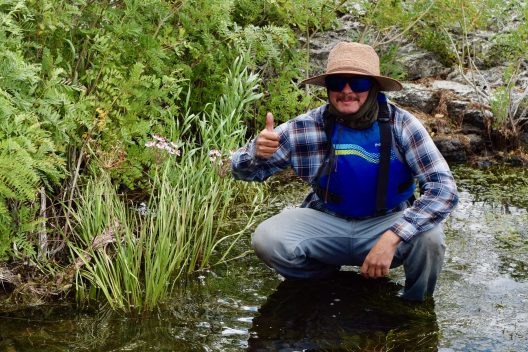
was taking care of the study plants. He soon went on to earn a master’s and PhD in environmental horticulture at the University of Florida, where he studied how to grow and cultivate native plants for restoration. For the past four years, Gabriel was the botany program manager for the Institute for Natural Resources and the director of the Rae Selling Berry Seed Bank at Portland State University.
“I don’t want to say compulsive behavior, but plants and botany and horticulture is just something that I’m drawn to naturally. I get a lot of great personal joy and fulfillment out of this type of work,” Gabriel said.
Dan and Gabriel complement one another, having worked in different specialties at the intersection of botany and ecology. Both bring their experiences into how they’d like to increase conservation initiatives in their roles. Coming from a horticultural background, Gabriel wants to increase ex-situ conservation practices such as seed banking. Dan, with his experience in phylogenetics and species modeling, hopes to increase DNA sampling to better understand population genetics and gene flow, which in turn can better inform activities such as reintroductions.
One of the projects Dan and Gabriel are currently working on is surveying candidate species for federal listing status across the state. Both are looking forward to getting out into the field and learning about the many different ecosystems and rare plants that live in Washington.