Focus Species Profile: Olympic milkvetch
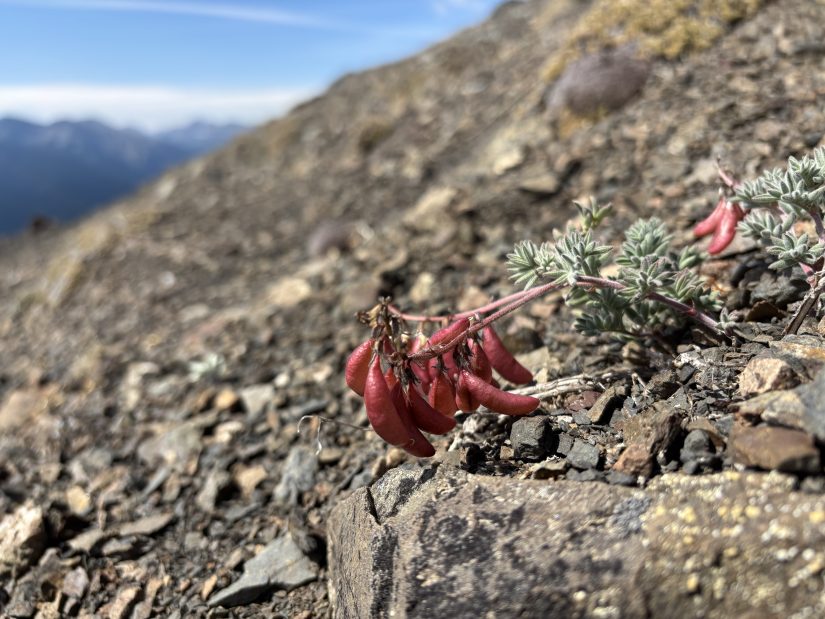
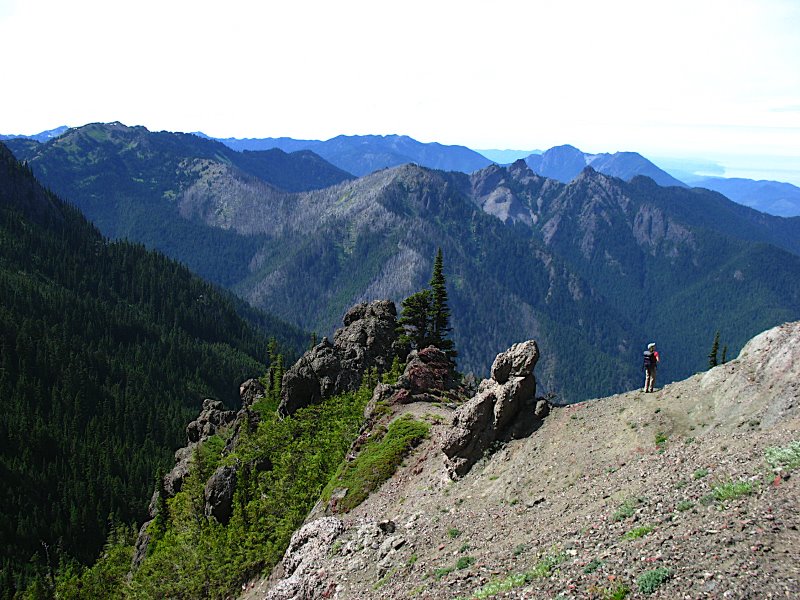
Along the basalt crescent formation in the northeast quarter of the Olympic Peninsula, where alpine cushion plant meadows give way to jagged cliffs, grows Olympic milkvetch, Astragalus australis var. cottonii (also called Cotton’s milkvetch). Its blue-green compound leaves held on pink stems, while distinctive, surprisingly blend into the dark gray shale and basalt substrate. Its fruits, however, are easy to spot, as a raceme of white and lavender-smudged flowers yields deep red, inflated pods.
Olympic milkvetch inhabits steep slopes with loose scree, gravel, and sand where few other plants grow. On top of these harsh conditions, like all alpine plants, this species tolerates icy winters and baking hot summer soil temperatures. Decreased snowpack and hotter, drier summers expected with climate change will only make growing here more difficult.
That’s why we became concerned when we visited four of the eight known populations between 2020 and 2021 and noticed a 60% decrease in population size at three populations as compared to estimates made in 1985. Declines appear to be ongoing: Rare Care revisited one population in 2025 and only found 15 plants, down from 100-300 plants we found in 2021.
With a generous gift from private donors, Rare Care is taking action by collecting seeds from five of the seven populations. Banking these seed collections will help preserve the genetic diversity remaining in these populations in the event they blink out and provide material we need to introduce to appropriate sites. We are also summarizing our findings in a species status report that we hope will trigger consideration for listing the milkvetch under the Endangered Species Act.