Cracking the Coat
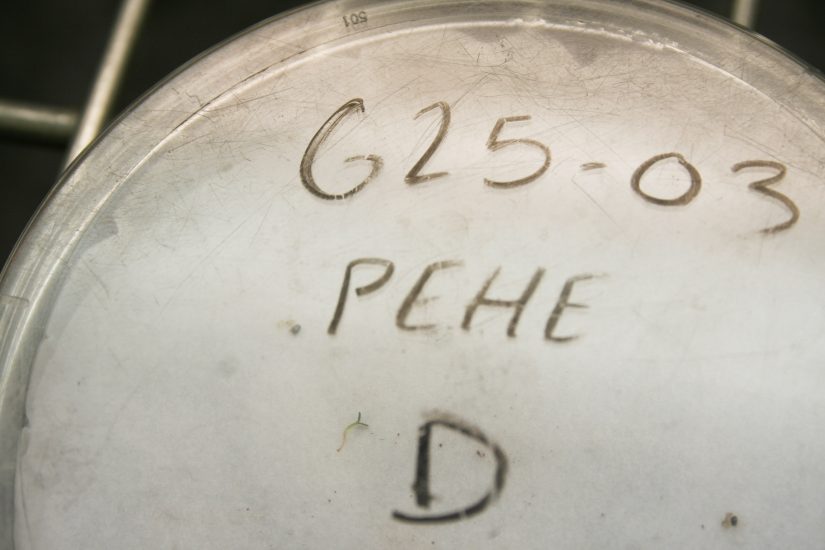
(first leaves) and radicle inside a germination plate. Photo: Naomi Reibold
A seed’s journey from its mother plant to long-term storage in the Miller Seed Vault involves many steps. As our volunteers know, locating wild populations and ensuring optimal timing for collecting ripe seeds takes careful planning, and cleaning them requires close attention to detail. But for Kylie Gates, a fourth-year University of Washington student and Rare Care volunteer, once all the seed collecting and processing is finished, her work can begin.
Kylie started volunteering with Rare Care last year to help with the next step in our seed storage and research process — germination testing. Germination testing serves two purposes: it allows us to check what portion of the seeds in a collection are viable, and to research how to get each species’ seeds to germinate.
Kylie has her work cut out for her. For native plants in general, and especially rare species, the best methods to coax seeds out of dormancy and germinate are not known. Species have adapted a diverse array of strategies to delay germination until conditions are best for growth. Germinating before a hard freeze, heat wave, or dry spell could be fatal, so seeds will remain dormant until conditions are just right. In the Pacific Northwest, many species require a period of cold, moist temperatures followed by warmer temperatures to trigger germination. Other species may require scarification, a process that breaks an impermeable seed coat to allow germination, through physical abrasion, exposure to extreme heat, strong acids, or chemicals in smoke.
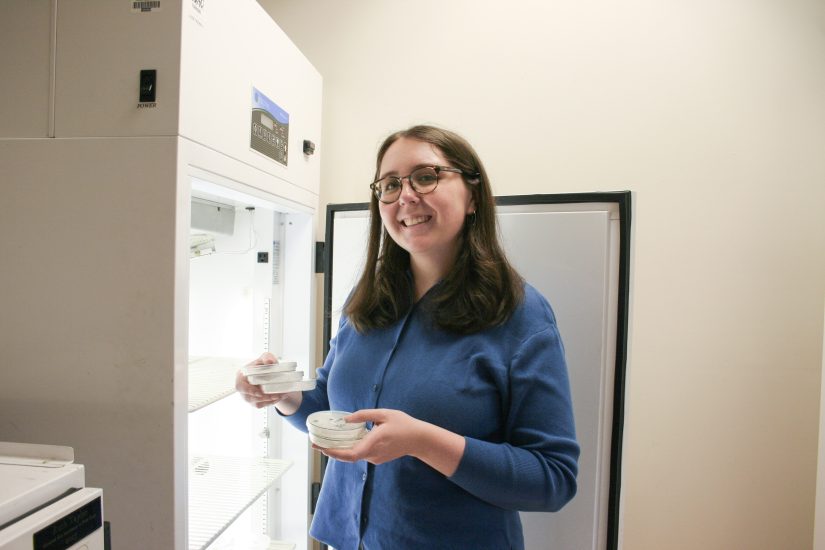
By helping us with germination testing, Kylie is uncovering each species’ germination needs. To start a test, she removes seeds from the seed vault and places them onto several petri dishes with wetted filter papers.
To germinate a species that we have never grown before, we start by assessing how many seeds germinate when we expose them to “winter” (cold, moist conditions), followed by “summer” (warm conditions). We compare germination in this group to seeds placed only in “winter” or only in “summer”. Kylie checks each petri dish of seeds weekly to document how many seeds germinate over time. When a test is complete, these data reveal which treatment worked best, or whether we need to try other techniques to break seed dormancy.
These results help cover a gap in our understanding about how to germinate these species, the first step needed if and when we need to reintroduce these species back in the wild. It also helps us understand the viability of our seed collections and which species need to be recollected.