Welcome to Anna Carragee, New Rare Care Program Staff Member

“I love getting the reports back from rare plant monitoring volunteers–hearing how their searches went and seeing photos from successful hunts.”
Read moreA Town Called Malus
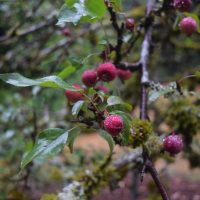
This week’s selections honor the area we call Crabapple Meadow and the residing collections therein. Each summer, the Meadow becomes home base for our annual summer camp participants and instructors and with this year’s season winding down, we feel it is a good time to recognize a handful of our terrific Malus specimens.
1) Malus ‘Sundog’
The “Flowering Crabs” comprise a genus of some 35 species of deciduous trees found throughout northern temperate regions.
Read moreAugust 2021 Plant Profile: Thujopsis dolabrata
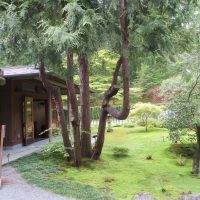
During these dog days of summer I am especially appreciative of all my conifer friends, providing blessed shade, a sweet smell on the air and a cool background on which my squinting eyes may rest. One conifer in particular is especially welcome to my eye, Thujopsis dolabrata var. dolabrata, with its deep green, glossy scales and wide-sweeping branchlets. This gorgeous conifer is stately, trouble free, and slow growing to the point where it will happily spend 30 to 50 years in a Seattle-sized yard without terrifying your too-common panicky neighbor.
Read moreUW Farm Weekly Dirt: Zucchini Overload
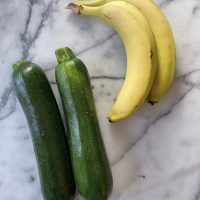
If I asked you, “what is the most prolific summer crop in your garden” what would you answer? My guess is zucchini.
Last year, the UW Farm grew over 3,000 pounds of zucchini from only 5 beds (250 total bed feet), despite powdery mildew, smoke-filled skies and a record wet spring. That’s a lot of zucchini bread, zucchini Parmesan, and zucchini noodles.
UW Farm’s Weekly Dirt: Focus on Fennel
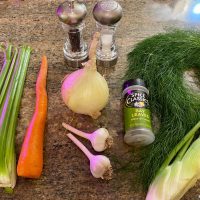
A licorice fragranced vegetable may seem like a strange combination, unless you have come across fennel, the whole plant, feathery frond and bulging stem. As it turns out, this aromatic perennial (or annual depending on your climate) in the carrot family has a fascinating history, playing a medicinal and even mystical role in our culture since ancient times.
As a commercial farmer years ago, I explored growing fennel to appeal to high-end restaurant chefs, In the last five years at the campus farm, I have learned that it is simple to grow, has many organic uses (beneficial insects love it!) and newly discovered recipes continue to pull me into its culinary orbit.
New leadership for UW Botanic Gardens announced

UW Botanic Gardens welcomes Dr. Christina Owen as Director, starting September 13, and School of Environmental and Forest Sciences Professor Dr. Josh Lawler as the new Faculty Director.
Read moreSelected Mid-Summer Cuttings from the WA Park Arboretum
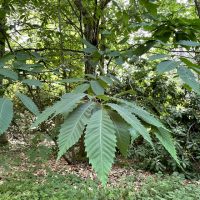
1) Castanea dentata American Chestnut
American Chestnut once dominated many forests from Maine and southern Ontario to Mississippi and from the Atlantic coast to the Appalachian Mountains, and was once one of the most common trees in the northeastern United States.
American Chestnut suffered a catastrophic population collapse due to the chestnut blight, a disease caused by an Asian bark fungus (Cryphonectria parasitica).
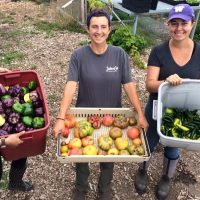
How Virtual Programs Have Supported Our Community Over The Past Year

In March of 2020, in-person gatherings were shut down as the COVID-19 pandemic had just begun. Program offerings at our gardens and all over the world ceased, but the demand for educational opportunities only increased while people diligently stayed home. Flash forward two months, the UW Botanic Gardens offered our first ever adult education class on a virtual platform. Unsure of how the class would go, all 29 people registered for the previously planned in-person class “Gardening with the Seasons: Spring,” logged onto Zoom.
Read moreEarly Summer Selected Cuttings at the Washington Park Arboretum

1) Acer palmatum ‘Nuresagi’ Japanese Maple
Now that the vivid colors of the emerging foliage of Japanese Maples have faded, it is time to appreciate the summer beauty of the sometimes, very colorful samaras (winged achene containing the maple seed).
Not all Japanese Maples produce showy samaras, but some cultivars are known specifically for this.
Acer palmatum ‘Nuresagi’ (“nuresagi” translates to “wet heron”) is located at the edge of the Upper Woodland Garden Pond.