Collecting Takes a Collective
Seed collecting truly highlights the collective (pun not intended) nature of our botanical community. This spring and summer, we completed 43 rare plant seed collections that were made possible through years of collaboration with the Washington Natural Heritage Program, state and federal partners, and Rare Care volunteers. Other people outside of these partnerships survey, collect herbarium specimens, and make observations without knowing what plant conservation they may enable.
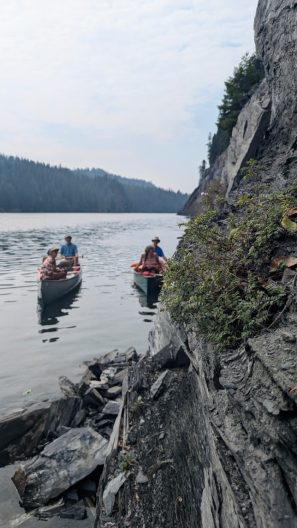
Take the least bladdery milkvetch (Astragalus microcystis), a rare and lovely lavender-flowered, silvery-haired pea. As part of a grant with the Center for Plant Conservation, Rare Care was tasked with making two seed collections of this state sensitive plant from populations on Department of Interior (DOI) land, narrowing the possible populations to collect from to four. Unfortunately, three of these populations were not found in our scouting efforts. Two were historical records from the 1940s with low geographic precision, and we could not locate these populations, possibly due to flooding caused by the construction of the Grand Coulee Dam. The third population originally had only 6 individuals, and it may now be extirpated. After combing iNaturalist for more recent sightings of the species, I contacted Kettle Falls-based botanist Kyle Chamberlain about his iNaturalist observations at Lake Roosevelt National Recreation Area (NRA). We realized the National Park Service (NPS) had no records of the population he documented there, and this July, I was able to meet up with NPS biologist Cam Prophet to collect seeds and occurrence data, which NPS can now use to manage the population. Without Kyle’s observations and initial identification, a seed collection at Lake Roosevelt NRA would not have happened.
As some may have noticed, many Rare Care volunteers and iNaturalist users have received messages from me this season. I used volunteer monitoring reports and people’s observations to check phenology (timing of plants’ reproductive condition) and enable site access. Sarah Krock and I divided the task of monitoring a large population of rosy owl’s-clover (Orthocarpus bracteosus) together, so that I knew when and where I could collect seeds. Barbara Varnum-Finney and I collected Thompson’s clover (Trifolium thompsonii) at different populations, and I was able to collect seeds at an ideal time thanks to her. Carol Mack and John Stuart, who had monitored least bladdery milkvetch by canoe in 2023, helped me make a collection at the same population. Many other Rare Care volunteers also helped me this season.
Continued and successful collaboration was one of the most rewarding aspects of my seasonal technician position for me. Even when I worked independently in the field, I knew my work was the result of many people’s long commitment to documenting and protecting our rare flora.